
10 mile training plan pdf
Embarking on a 10-mile journey requires a structured approach! This plan emphasizes gradual progression, incorporating varied workouts, and prioritizing recovery for optimal performance and enjoyment.
Assessing Your Current Fitness Level
Before diving in, honestly evaluate your running background. Can you comfortably run 3 miles? How often do you currently exercise? Consider recent activity levels and any existing injuries. A realistic self-assessment is crucial. If you’re new to running, start conservatively. Don’t overestimate your capabilities; gradual increases are key. Understanding your baseline allows for a tailored plan, minimizing risk and maximizing progress. This initial evaluation sets the foundation for a successful 10-mile training experience.
Setting Realistic Goals & Timeframe (3-4 Months)
A 3-4 month timeframe is ideal for building up to 10 miles. Define your primary goal – completion, a specific time, or simply enjoying the process. Be honest about your schedule and commitments. Don’t try to do too much too soon! Incremental progress is vital. Break down the larger goal into smaller, achievable weekly milestones. This approach fosters motivation and prevents burnout. Remember, consistency trumps intensity, especially during the initial phases of training.
Importance of Gradual Progression
Gradual progression is paramount to injury prevention and sustained improvement. Avoid increasing weekly mileage by more than 10%. This allows your body to adapt to the increasing demands. Listen to your body; rest when needed. Don’t push through pain. Building a solid base is crucial before introducing speed work; Slowly increase long run distances, and remember, finishing comfortably is more important than speed initially. Patience and consistency will yield far better results than aggressive, rapid increases.

Building Your Base Mileage
Establishing a consistent running routine is key! Begin with 3-4 runs weekly, focusing on comfortable paces and incorporating walk breaks as needed for success.
Week 1-2: Establishing a Consistent Routine (3-4 Runs/Week)
Prioritize consistency during these initial weeks. Aim for 3-4 runs per week, keeping the distances manageable – think 3 to 4 miles initially. Focus on completing the runs at a conversational pace; speed isn’t the goal yet. Don’t hesitate to integrate walk breaks when fatigue sets in. A Tuesday and Saturday run, alongside OTF workouts, is a solid starting point. Remember, building a foundation is paramount, so listen to your body and avoid pushing too hard, too soon. Gradual increases are vital!
Comfortable Pace Runs: Focus on Completion
Embrace a pace where conversation remains easy. These runs aren’t about speed; they’re about building endurance and establishing a consistent rhythm. Don’t worry about hitting specific times – prioritize finishing each run comfortably. If you find yourself breathless, slow down or incorporate walk breaks. Remember your mother’s journey – fun is key! This approach builds a strong aerobic base, preparing your body for more intense workouts later. Completion builds confidence and prevents early burnout.
Incorporating Walk Breaks When Needed
Don’t hesitate to walk! Walk breaks are a valuable tool, not a sign of weakness. They allow you to recover briefly, preventing fatigue from derailing your run. A simple strategy: run for a set time, then walk for a minute or two. As fitness improves, reduce walk intervals. Remember, finishing is the primary goal; Like your mother’s training, prioritize completion over speed. Listen to your body; walk when needed, and resume running when recovered. It’s about consistent effort, not relentless pushing.

Integrating Strength Training
Strength work is crucial! It builds supporting muscles, enhances running form, and minimizes injury risk, complementing your running schedule for peak performance.
Strength Training for Runners: Key Muscle Groups
Targeting specific muscle groups is vital for runners. Legs – quads, hamstrings, glutes, and calves – provide power and endurance. A strong core (abs and back) stabilizes your body and improves form. Don’t neglect upper body strength; it aids arm drive and overall balance. Strengthening these areas prevents injuries and enhances running efficiency. Focus on functional movements that mimic running motions, building resilience and maximizing performance throughout your 10-mile training.
Sample Strength Training Exercises (Legs, Core, Upper Body)
For legs: squats, lunges, calf raises, and hamstring curls build strength. Core work: planks, Russian twists, and leg raises enhance stability. Upper body: push-ups, rows, and bicep curls improve arm drive. Perform 2-3 sets of 10-12 repetitions for each exercise. Remember proper form is crucial to prevent injury. Incorporate these exercises 2-3 times weekly, allowing for adequate recovery between sessions to maximize benefits during your 10-mile preparation.
Frequency and Timing of Strength Workouts
Aim for 2-3 strength training sessions per week. Schedule these on non-running days, or after easy runs, to avoid overtraining. Avoid heavy lifting immediately before long runs. Prioritize recovery – allow at least 24-48 hours between strength workouts targeting the same muscle groups. Consider incorporating strength work in the mornings, leaving afternoons for running. Consistency is key; build strength gradually alongside your running mileage for optimal results and injury prevention.

Speed Work & Interval Training
Intervals boost speed and endurance! Incorporate structured workouts like 400m or 800m repeats, always preceded by a thorough warm-up and followed by a cool-down.
Interval training is a cornerstone of 10-mile preparation, enhancing both speed and stamina. It involves alternating between high-intensity bursts and recovery periods, pushing your cardiovascular system and building lactate tolerance. Don’t aim for record-breaking paces initially; focus on completing the intervals with good form. This isn’t about sprinting the entire distance, but developing the ability to run faster for sustained periods. Remember, it’s a tool to supplement your base mileage, not replace it. Prioritize proper warm-up and cool-down routines to prevent injury and maximize benefits.
Sample Interval Workouts (e.g., 400m repeats, 800m repeats)
Here are a few interval workouts to integrate into your training. Start with 6-8 x 400m repeats at a comfortably hard pace, with equal recovery jogs. Progress to 4-6 x 800m repeats, again with recovery jogs. Another option is a ladder workout: 400m, 800m, 1200m, 800m, 400m, with recovery between each. Always begin with a thorough warm-up – dynamic stretching and easy jogging – and conclude with a cool-down. Adjust the number of repeats and recovery time based on your fitness level and how you feel.
Importance of Warm-up and Cool-down
Never skip your warm-up and cool-down routines! A dynamic warm-up prepares muscles for exertion, increasing blood flow and flexibility, reducing injury risk. Include leg swings, arm circles, and torso twists. A cool-down aids recovery, gradually lowering heart rate and preventing muscle soreness. Gentle jogging followed by static stretches – holding each stretch for 30 seconds – is ideal. Prioritizing these phases enhances performance and supports long-term running health, ensuring consistent progress.

Long Run Progression
Gradually increase your weekly long run distance! Employ the “there and back” technique for accountability, and prioritize fueling and hydration during these extended efforts.
Weekly Long Run Schedule (Gradually Increasing Distance)
Begin with a comfortably manageable distance, perhaps 3-4 miles for the first week, focusing on completion rather than speed. Over the subsequent weeks, incrementally increase the distance – adding no more than a mile each time. Alternate weeks of increase with weeks of maintaining the same distance to allow for adaptation.
For example, follow a pattern like 3, 4, 3, 5, 4, 6, and so on. Remember, consistency is key! Don’t feel pressured to jump mileage quickly; listen to your body and adjust accordingly. The goal isn’t to mimic race distance in training, but to build endurance.
Fueling and Hydration Strategies for Long Runs
Prioritize hydration before, during, and after your long runs. Drink water consistently throughout the day leading up to the run, and consider carrying water or planning a route with water stops for runs exceeding 60 minutes. For runs longer than 75-90 minutes, experiment with energy gels or chews to replenish glycogen stores.
Post-run, focus on replenishing fluids and carbohydrates. A balanced snack or meal within 30-60 minutes aids recovery. Don’t drastically change your diet on run days; stick to familiar foods to avoid digestive issues.
The “There and Back” Run Technique for Accountability
The “there and back” run is a simple yet effective strategy for maintaining motivation and ensuring completion. Run a predetermined distance out, knowing you must return the same distance. This eliminates the temptation to shorten your run when fatigue sets in, fostering mental toughness.
It’s particularly useful for building confidence and establishing a consistent routine. Start with shorter out-and-back segments, gradually increasing the distance as your fitness improves. Remember, the initial commitment is the hardest part!

Cross-Training & Recovery
Supplement running with activities like OTF, cycling, or swimming! Prioritize active recovery—yoga and stretching—and remember that rest days are crucial for preventing injury.
Benefits of Cross-Training (OTF Workouts, Cycling, Swimming)
Cross-training offers vital benefits beyond running! Activities like Orangetheory Fitness (OTF) build strength and cardiovascular fitness without the impact stress. Cycling and swimming are excellent low-impact options, enhancing endurance and working different muscle groups. Incorporating these diversifies your training, reduces overuse injuries, and prevents burnout. Remember, HIIT, like OTF, is a tool to supplement, not replace, dedicated running days. A well-rounded approach maximizes your 10-mile preparation and overall fitness.
Active Recovery Techniques (Yoga, Stretching)
Prioritize recovery as much as training! Active recovery, like yoga and stretching, promotes blood flow, reduces muscle soreness, and improves flexibility. These techniques aid in repairing muscle tissue damaged during runs and strength workouts. Don’t underestimate the power of rest days – they are crucial for adaptation and preventing injury. Listen to your body; if you’re fatigued, take a day off. Consistent recovery ensures you’re prepared for each subsequent workout and ultimately, the 10-mile race.
Importance of Rest Days
Rest days aren’t a sign of weakness, but a cornerstone of progress! Your body needs time to rebuild and adapt after strenuous workouts. Skipping rest increases injury risk and hinders performance gains. Incorporate at least one full rest day per week, and consider active recovery like gentle stretching or walking on others. Listen to your body’s signals – fatigue is a cue to slow down. Adequate rest ensures you’re consistently prepared for each training session and ultimately, a successful 10-mile race.

Monitoring Progress & Adjusting the Plan
Regularly track your mileage, pace, and heart rate! Adjust the plan based on how your body feels, prioritizing recovery and preventing overtraining for success.
Tracking Mileage, Pace, and Heart Rate
Consistent data collection is crucial for informed adjustments. Utilize a running watch or app to meticulously record your weekly mileage, noting any increases or decreases. Monitor your pace during various workouts – easy runs, intervals, and long runs – to gauge improvement.
Heart rate monitoring provides valuable insight into exertion levels. Track resting heart rate and heart rate during runs to assess fitness and identify potential fatigue. Analyzing these metrics allows for personalized adjustments, ensuring you’re progressing safely and effectively towards your 10-mile goal.
Listening to Your Body & Recognizing Fatigue
Your body provides vital feedback; learn to interpret it! Don’t rigidly adhere to the plan if experiencing persistent soreness, unusual fatigue, or pain. Recognize subtle signs like decreased performance, sleep disturbances, or loss of appetite;
Prioritize rest and recovery when needed, even if it means adjusting the schedule. Ignoring these signals can lead to injury. Remember, consistent progress is better than pushing through discomfort. Adjust based on how you felt after each run, not just the planned mileage.
Adjusting the Plan Based on Performance & Recovery
Flexibility is key to a successful training plan! If consistently exceeding mileage goals with ease, cautiously increase the long run distance or add an extra speed workout. Conversely, if struggling with recovery or experiencing fatigue, reduce mileage or incorporate more rest days.
Don’t be afraid to repeat weeks or modify interval intensities. Prioritize listening to your body and adapting the plan to your individual needs and progress. Small adjustments prevent setbacks!

Nutrition for 10-Mile Training
Fueling your body is crucial! Prioritize a balanced diet with adequate macronutrients, strategic pre- and post-run meals, and consistent hydration for peak performance.
Macronutrient Balance for Runners
Runners require a carefully calibrated macronutrient intake. Carbohydrates are your primary fuel source, providing energy for mileage; aim for 55-65% of daily calories. Protein, around 15-20%, aids muscle repair and recovery after strenuous workouts. Healthy fats, constituting 20-30%, support hormone production and overall health.
Don’t neglect micronutrients – vitamins and minerals – essential for optimal bodily functions. Adjust ratios based on training intensity and individual needs, focusing on whole, unprocessed foods for sustained energy and recovery.
Pre-Run and Post-Run Nutrition
Fueling strategically around runs is crucial for performance and recovery. Pre-run, consume easily digestible carbohydrates 1-3 hours beforehand – think a banana or toast with honey – for sustained energy. Avoid high-fat or high-fiber foods that can cause digestive distress.
Post-run, prioritize replenishing glycogen stores and repairing muscle tissue within 30-60 minutes with a combination of carbohydrates and protein, like chocolate milk or a protein shake with fruit.
Hydration Strategies
Maintaining proper hydration is paramount throughout your 10-mile training. Drink water consistently throughout the day, not just during runs. Before a long run, pre-hydrate with 16-20 ounces of water 2-3 hours prior. During runs exceeding 60 minutes, consume 4-8 ounces of water or a sports drink every 20-30 minutes.
Post-run, rehydrate with 20-24 ounces of fluid for every pound lost during exercise. Electrolyte replacement is also beneficial, especially after longer or more intense efforts.

Injury Prevention
Prioritize injury prevention with proper form, stretching, and foam rolling! Address muscle imbalances and listen to your body, avoiding pushing through significant pain.
Common Running Injuries & How to Avoid Them
Shin splints, stress fractures, and runner’s knee are frequent concerns. Avoiding these requires gradual mileage increases, proper footwear, and strengthening key muscle groups. Pay attention to running form – overstriding can contribute to issues. Incorporate regular stretching, focusing on calves, hamstrings, and quads. Foam rolling aids recovery and addresses muscle tightness. Don’t ignore pain; rest and seek professional help if needed. Listen to your body and adjust your training accordingly to prevent setbacks and maintain consistent progress.
Proper Running Form & Technique
Efficient form minimizes injury risk and maximizes performance. Maintain a slight lean from the ankles, avoiding bending at the waist. Keep your cadence relatively high – aim for around 170-180 steps per minute. Land midfoot, rather than heel striking, to reduce impact. Relax your shoulders and keep your arms bent at 90 degrees, swinging forward and back. A compact stride improves efficiency. Consider a gait analysis to identify and correct any biomechanical imbalances, leading to a smoother, more sustainable running style;
Importance of Stretching and Foam Rolling
Regular stretching and foam rolling are crucial for injury prevention and recovery. Dynamic stretching before runs prepares muscles for activity, while static stretching post-run improves flexibility. Foam rolling targets muscle knots and improves blood flow, reducing soreness. Focus on major running muscle groups – quads, hamstrings, calves, and hip flexors. Incorporate these practices 2-3 times per week, or even daily, to maintain muscle health and range of motion, supporting consistent training and minimizing discomfort.
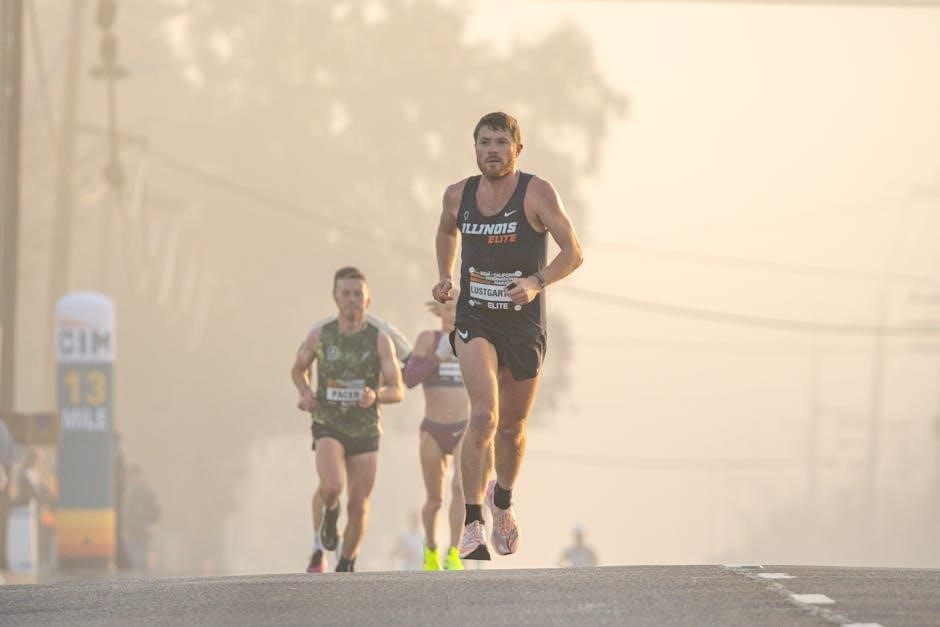
Race Day Preparation
Final weeks involve tapering mileage, optimizing nutrition and hydration, and solidifying a mental strategy. Gear check and logistical planning are also essential for success!
Tapering Your Training in the Final Weeks
As race day nears, reducing mileage is crucial for allowing your body to recover and store energy. Typically, begin tapering 2-3 weeks out, decreasing weekly mileage by 10-20%. Maintain intensity early in the taper, then reduce it as well. Avoid introducing any new workouts or drastically changing your routine. Prioritize sleep, nutrition, and hydration during this phase. Trust the work you’ve already done; resist the urge to cram in extra training. A well-executed taper ensures you arrive at the starting line feeling fresh and prepared to perform your best!
Race Day Logistics (Gear, Nutrition, Hydration)
Careful planning ensures a smooth race experience! Wear well-tested gear – shoes, socks, and apparel – to avoid blisters or chafing. Stick to familiar pre-race nutrition; don’t experiment with new foods. Hydrate consistently in the days leading up to the race and sip water before the start. Carry energy gels or chews if needed, practicing with them during long runs. Know the course layout and aid station locations. Arrive early to avoid stress and allow ample time for warm-up and bathroom breaks.
Mental Preparation & Race Strategy
A strong mindset is crucial for success! Visualize yourself running strong and finishing confidently. Break the 10 miles into smaller, manageable segments. Develop a pacing strategy – start conservatively and maintain a consistent effort. Prepare for challenging moments and have positive self-talk ready. Remember your training and trust your body. Focus on your breathing and form when fatigue sets in. Embrace the experience and enjoy the accomplishment, knowing you’ve prepared diligently!